TMJ Physical Therapy – How to Reduce Jaw Pain, Headaches, and Neck Tension
A practical guide for patients in the Chicago area struggling with jaw pain, clicking, and headaches
Jaw pain, clicking, popping, or a feeling of “tightness” in the jaw are very common problems. Many people do not realize that they may be related to TMJ dysfunction – a problem with the temporomandibular joints, which connect the jaw to the skull. These issues often cause not only local pain, but also headaches, neck tension, and ear symptoms.
Very often, patients are prescribed medications, night guards, or are told to “wait and see”. However, if the underlying mechanics of the jaw, neck, and surrounding soft tissues do not improve, the pain usually comes back. That is why TMJ physical therapy can be such an important part of treatment. It focuses on the cause of the problem – how the joints, muscles, nerves, and fascia around the jaw actually work – instead of only masking symptoms.
What Is TMJ Dysfunction?
The temporomandibular joint (TMJ) works like a sliding hinge between your lower jaw and your skull. You use it every time you talk, chew, yawn, or laugh. When the joint, surrounding muscles or the small disc inside the joint stop working smoothly, we call it TMJ dysfunction or TMD. The problem may start gradually or after an injury, a dental procedure, a stressful period or long-term teeth clenching.
Because the TMJ is located close to the ear, the neck and important cranial nerves, its dysfunction can cause a wide range of symptoms, not only in the jaw itself. This is one reason why TMJ problems are sometimes overlooked or misdiagnosed as purely dental, ENT or neurological issues.
Common Symptoms of TMJ Problems
TMJ dysfunction can show up in many different ways. Sometimes the symptoms are mild and annoying. In other cases, they can significantly limit daily activities such as eating, talking or concentrating at work.
- Jaw pain or tightness around the cheeks, temples or in front of the ear,
- clicking, popping or grinding sounds when opening or closing the mouth,
- difficulty opening the mouth wide, locking or feeling that the jaw “gets stuck”,
- headaches in the temples, forehead, behind the eyes or at the base of the skull,
- neck pain, shoulder tightness or a sense of heaviness in the upper back,
- ear fullness, ringing in the ears (tinnitus) or dizziness without clear ENT findings,
- tooth sensitivity or pain despite normal dental exams,
- morning jaw fatigue or pain from night-time teeth clenching or grinding (bruxism).
Importantly, these symptoms do not need to appear all at once. Even one or two of them may suggest that TMJ physical therapy could be helpful, especially when they keep coming back or get worse during stress.
What Causes TMJ Dysfunction?
TMJ problems rarely have just one simple cause. Instead, they usually develop due to several overlapping factors. Understanding them is the first step toward choosing the right treatment instead of relying only on painkillers.
- long-term teeth clenching or grinding related to stress,
- poor posture, especially a forward head position during computer or phone use,
- restricted mobility or instability in the cervical spine,
- previous trauma to the jaw, head or neck (for example, whiplash injuries),
- dental factors, such as recent dental work or bite changes,
- local inflammation or irritation of the TMJ structures,
- stress and anxiety, which increase muscle tension in the jaw and neck.
Because so many systems are involved – muscles, joints, nerves, fascia and even blood and lymph circulation – a multidisciplinary and conservative approach is recommended by leading centers, including Cleveland Clinic. Physical therapy plays a key role in this conservative care model.
How Can TMJ Physical Therapy Help?
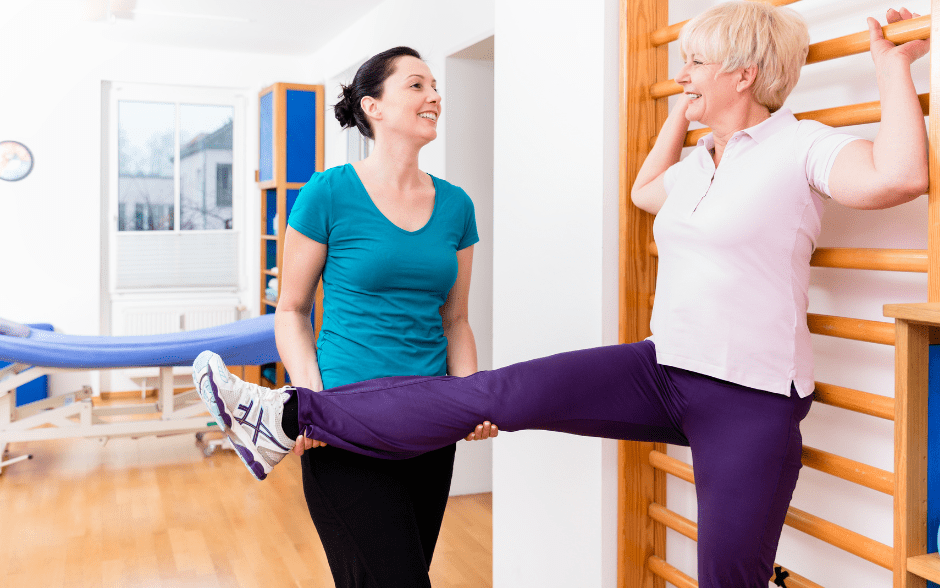
TMJ physical therapy focuses on restoring normal movement and reducing strain in the jaw, neck and surrounding tissues. Instead of treating only one symptom, we look at how your whole head, neck and upper body work together. This whole-body approach is especially important when jaw pain is combined with headaches or neck tension.
Improving jaw joint mechanics
Gentle manual techniques help the TMJ move more smoothly, support better disc position and reduce joint irritation. As mobility improves, the jaw can open and close with less effort and less pain. This often reduces clicking or popping as well.
Relaxing tight muscles and fascia
Overactive chewing muscles, neck muscles and fascial structures can keep the jaw in a constant “fight or flight” mode. Manual therapy and fascial techniques help these tissues relax, which reduces jaw tension, headaches and the feeling of pressure around the face or temples.
Calming the nervous system and reducing stress load
Many TMJ symptoms are related to a sensitive or overloaded nervous system. Gentle techniques that influence nerves, blood vessels and the coverings of the brain and spinal cord can decrease irritation and make the system less reactive. As a result, patients often notice less pain, fewer flare-ups and better sleep.
Supporting posture and neck alignment
Finally, we address posture and neck mechanics. A head that is constantly positioned forward puts extra stress on both the TMJ and the cervical spine. By improving alignment and muscle balance, we reduce the load on the jaw and help prevent symptoms from coming back.
Why TMJ Physical Therapy at PD Rehab Is Different
PD Rehab is one of only two clinics in the entire state of Illinois using the advanced method Fascial Counterstrain (FCS) on a daily basis. This gentle, highly precise approach allows us to work not only with muscles and joints, but also with the nervous system, blood vessels, lymphatic system and the coverings of the brain and
spinal cord that influence TMJ function.
You can read more about this method here: Fascial Counterstrain – physical therapy at PD Rehab.
Fascial Counterstrain for TMJ Problems
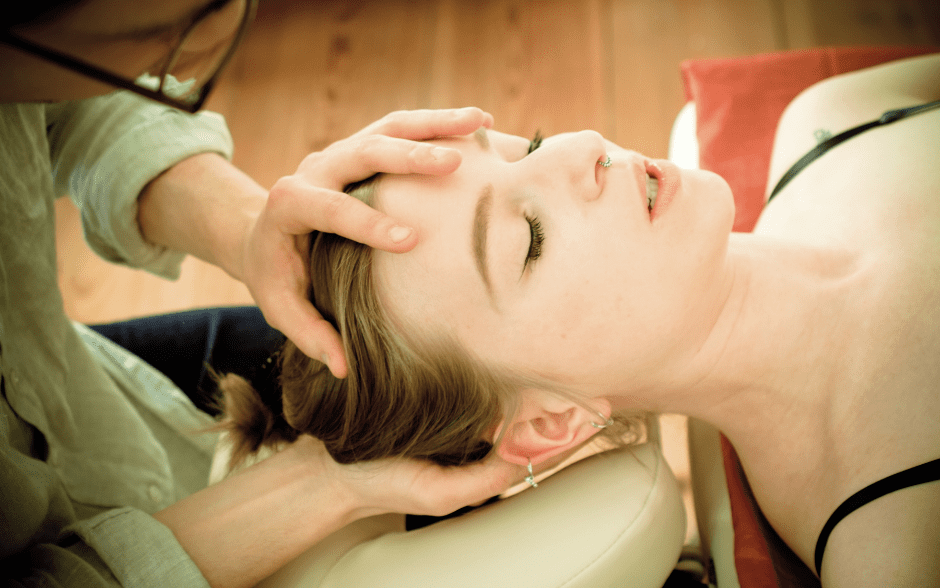
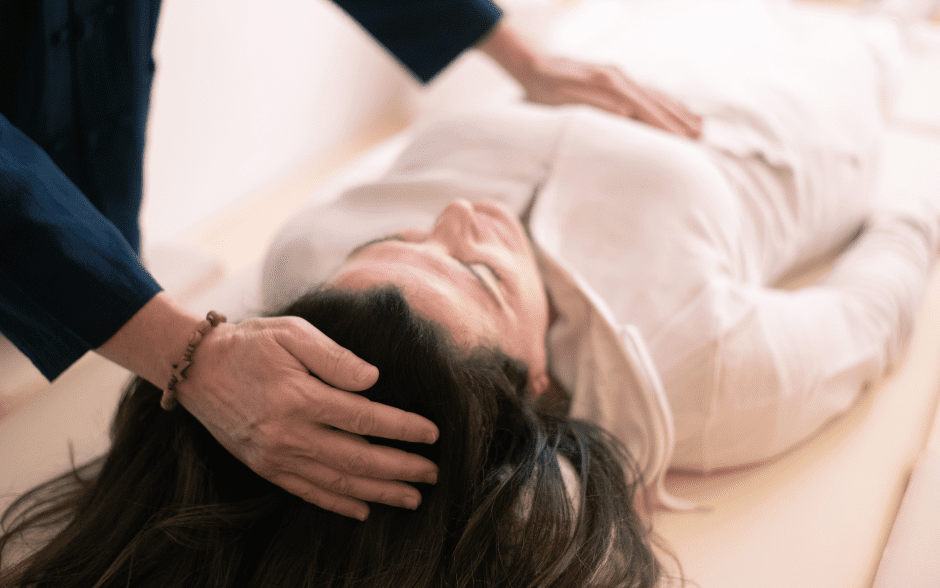
Fascial Counterstrain (FCS) is a unique form of manual therapy that uses very gentle positioning techniques to “reset” excessive tension in irritated tissues. Instead of pushing or stretching into pain, the therapist brings the body into positions of comfort, which allows the nervous system to release protective spasm and over-activity.
In TMJ dysfunction, FCS can influence:
- overloaded chewing muscles and deep jaw stabilizers,
- fascial restrictions around the TMJ and base of the skull,
- cranial and cervical nerves that carry pain from the jaw and face,
- small blood vessels that affect inflammation and pressure in the area,
- lymphatic drainage from the jaw, throat and neck,
- the meninges – the membranes that surround the brain and spinal cord.
Because FCS is so gentle, it is suitable even for patients who are very sensitive to touch or have had poor experiences with aggressive manipulation in the past. Many people describe it as finally giving the body a chance to “calm down” and stop protecting the painful area.
“For months I could not open my mouth fully, my jaw was clicking and I woke up every morning with pain in my temples. After several TMJ physical therapy sessions at PD Rehab, the clicking is almost gone and I can eat without fear that my jaw will lock. I also have far fewer headaches. The treatments were very gentle, but the change is huge.”
Anna, Des Plaines
When Should You See a Physical Therapist for TMJ?
You do not have to wait until jaw pain becomes severe. In fact, earlier treatment often means faster progress and fewer long-term changes in the joint. Consider booking an appointment for TMJ physical therapy if:
- you have jaw pain, tightness or fatigue that keeps coming back,
- your jaw clicks, pops or feels unstable when you open or chew,
- you wake up with jaw pain or headaches, especially during stressful periods,
- you have ear fullness, ringing or dizziness without clear ENT findings,
- your jaw has locked in the past or you are afraid it may lock again,
- your dentist mentioned TMJ problems or signs of grinding on your teeth,
- you prefer a conservative, non-invasive option before considering injections or surgery.
Who Treats TMJ at PDRehab?
At PDRehab in Mount Prospect, our team of experienced physical therapists works with TMJ patients on a regular basis. We help people from Chicago, Des Plaines, Arlington Heights and other nearby suburbs who are looking for a more complete and precise approach than standard exercises alone.
In TMJ cases, the main specialists are:
- Piotr Domagała – lead specialist in TMJ physical therapy, jaw-related headaches and nervous system-focused treatment using Fascial Counterstrain,
- Karolina Roman – physical therapist working with TMJ dysfunction, neck-related problems and stress-related jaw tension, with a special focus on the neural and vascular components.
Other therapists at PDRehab also address posture, neck mechanics and upper-body balance, which are crucial for lasting TMJ improvement. Together, we create an individualized plan so that treatment matches your specific symptoms and lifestyle.
Why Can TMJ Physical Therapy Help When Medications Do Not?
Pain medications and muscle relaxants can be useful in the short term. However, they work mainly on the symptom – pain or tension – and not on the mechanical and nervous system causes of TMJ dysfunction. When the medication wears off, the stress on the joint and tissues often remains the same.
In contrast, TMJ physical therapy improves:
- how the jaw joint moves and how well the disc and surrounding structures glide,
- muscle balance between the jaw, neck and shoulder girdle,
- fascial mobility and fluid circulation around the jaw and base of the skull,
- nervous system sensitivity and stress-related over-activation,
- everyday habits such as posture, chewing and sleeping position.
Because of this, the results are often more stable and predictable. Many patients can gradually reduce their need for pain medication – always in cooperation with their physician – as their jaw and neck begin to function more normally.
TMJ, Headaches and Neck Pain – How Are They Connected?
The jaw joint does not work in isolation. It is closely connected with the cervical spine, the muscles of the neck and shoulders, and with important cranial nerves that also carry pain from the head and face. Therefore, TMJ dysfunction can easily cause or aggravate headaches and neck pain.
For this reason, TMJ treatment at PD Rehab often includes work on the neck, upper back and even structures around the skull. If you also experience chronic headaches, you can learn more about our approach on the service page: Physical therapy for headaches and TMJ problems at PD Rehab.
What Results Can You Expect from TMJ Physical Therapy?
Every case is different, because every TMJ problem has its own combination of causes. Nevertheless, many patients report:
- reduced jaw pain and less facial tension,
- less clicking or popping in the TMJ,
- improved mouth opening and more comfortable chewing,
- fewer headaches and less neck pain,
- better sleep and less morning tightness in the jaw,
- greater awareness of posture and stress-related habits.
Most importantly, treatment is non-invasive and drug-free. It is designed to work together with dental care and medical management, not to replace them. This multidisciplinary approach gives you the best chance for long-term improvement.
Take the Next Step – TMJ Physical Therapy near Chicago
If you live in Chicago, Des Plaines, Arlington Heights or nearby suburbs and struggle with jaw pain, clicking, headaches or neck tension, you do not have to ignore these symptoms or rely only on pain medication. TMJ physical therapy at PD Rehab in Mount Prospect offers a gentle, highly specialized approach that addresses the true causes of your problem.
Schedule a free TMJ consultation with our specialist and take the first step toward more comfortable chewing, fewer headaches and a calmer, less tense jaw.