Headaches and Migraines – How Physical Therapy Can Help
A friendly guide for the Polish community in Chicago and the surrounding suburbs
Headaches are one of the most common complaints we see at PD Rehab in Mount Prospect, on the northwest side of the Chicago area. They can have many different causes, and in many cases, they are not related to serious neurological disease. Firstly, it is essential to understand that headaches are often associated with neck tension, muscle strain, stress, or impaired blood flow to the head and neck region. This is why, for many people, physical therapy for headaches and migraines turns out to be more effective than medication alone. Moreover, it targets the root cause of the problem, rather than merely suppressing pain for a short time.
Secondly, some patients experience migraines, but migraines often coexist with neck tension, stress, or problems in the temporomandibular joint (TMJ). Therefore, a proper physical therapy assessment helps us better understand where the pain comes from and how to treat it effectively.
The most common types of headaches
Tension-type headaches
Tension-type headaches are the most common type of headache. They usually appear during stress, prolonged computer work, poor posture or chronic tension in the neck and shoulder muscles. Patients often describe them as pressure, a “band” around the head or a heavy feeling that gets worse as the day goes on. Stiffness in the neck and a constant feeling of tight muscles are also very common.
Cervicogenic (neck-related) headaches
Cervicogenic headaches have their source in the cervical spine. They may develop, for example, due to overloaded joints, deep muscle tension or irritation of cervical nerves. The pain often radiates from the neck to the back of the head, the temples or around the eye. Importantly, it often gets worse after long periods of sitting, looking down at a phone or doing desk work.
In such cases, physical therapy for cervicogenic headaches is very effective, because it addresses the structures that actually cause the pain – the neck, muscles and nervous system.
Stress-related headaches and migraines
In addition, chronic stress affects the nervous, vascular and muscular systems. That is why headaches often appear after an intense, “stressful” day. They may also show up during periods of low mood, emotional tension or insomnia. Sometimes a patient wakes up already with a headache – very often this is related to night-time teeth grinding or clenching (bruxism) or an improper neck position during sleep.
In such situations, a treatment plan that combines hands-on work on the tissues with teaching better stress and tension regulation works particularly well. This gives the body a better chance to function more calmly and without pain.
When should you see a physical therapist for headaches and migraines?
You should consider seeing a physical therapist for headaches and migraines especially when:
- headaches keep coming back despite using pain medication,
- pain appears during computer work or prolonged sitting,
- headaches are accompanied by neck stiffness or neck pain,
- imaging tests (such as MRI or CT) show no serious changes,
- the pain keeps coming back in similar situations – for example after a stressful day, desk work or driving for long periods.
As a result, in many of these cases the headache is functional in nature. This means it comes from how the tissues and nervous system are working, not from structural brain damage. This is actually good news, because these types of problems usually respond very well to physical therapy.
What does headache treatment look like at PD Rehab?
Thorough assessment
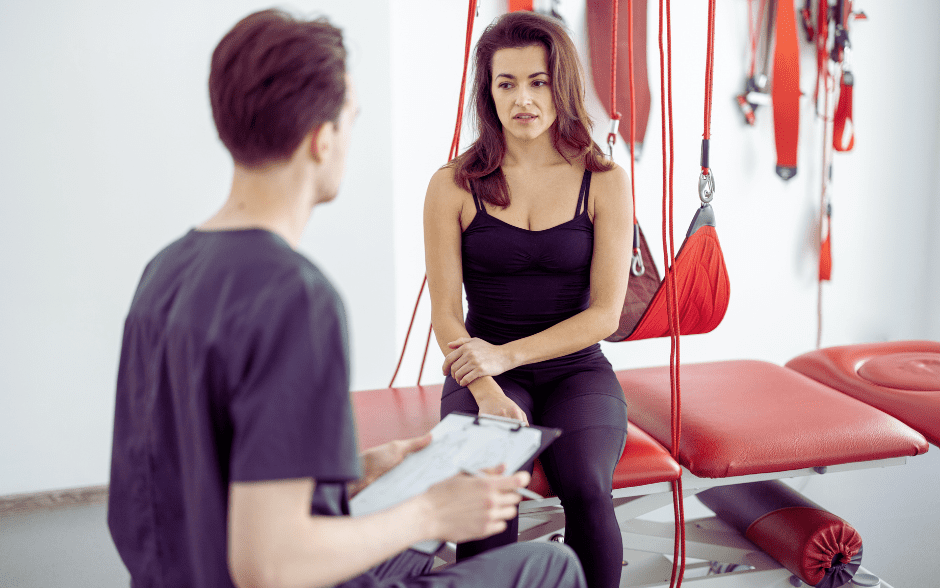
First, treatment at PD Rehab always starts with a detailed conversation and physical examination. We look at your head and neck alignment, cervical spine mobility, muscle tension in the neck and shoulders, and how your nervous system responds to touch and movement. We also ask about your lifestyle and stress level, because these factors very often influence pain.
Individual treatment plan
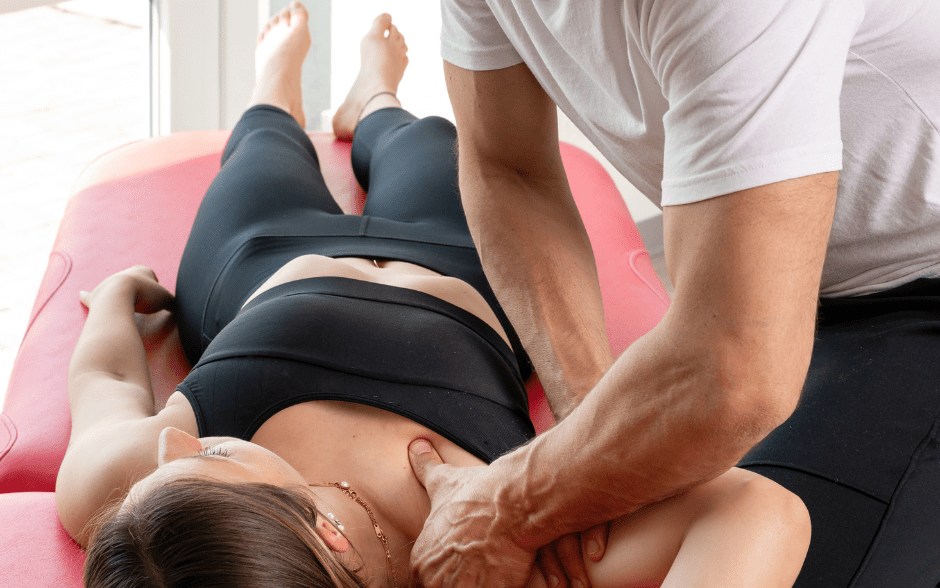
Next, based on the information from the assessment, we create an individual treatment plan. It may include gentle hands-on techniques, fascial work, improving neck mobility, stabilization exercises and simple changes in work ergonomics. In this way, we not only reduce pain, but also help restore better balance in the whole movement system and the nervous system.
Moreover, the effectiveness of this approach is supported by many clinical observations and by recommendations from leading institutions such as Cleveland Clinic, which emphasize the role of manual therapy, cervical spine work and lifestyle changes in the treatment of tension-type and cervicogenic headaches.
Why is PD Rehab one of the most effective clinics in Illinois?
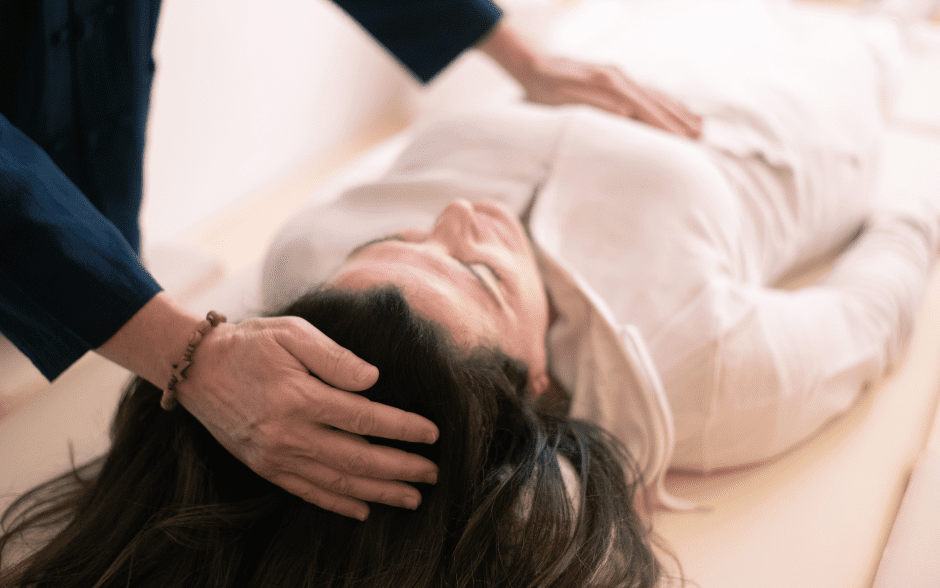
PD Rehab is one of only two clinics in the entire state of Illinois that use the advanced method Fascial Counterstrain (FCS). This is a very precise and gentle form of manual physical therapy that reaches deep neural, fascial and vascular structures responsible for pain, tension and migraine-like symptoms.
You can read more about this method here: Fascial Counterstrain – physical therapy at PD Rehab.
How does Fascial Counterstrain work?
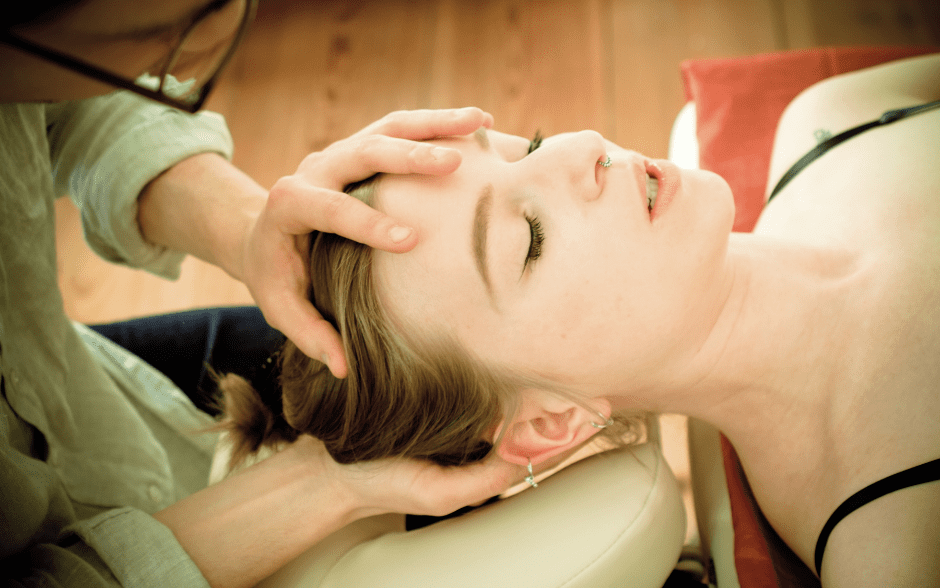
Fascial Counterstrain is a gentle form of manual therapy that helps “reset” excessive tension in nerves, fascia and blood vessels located around the head, neck and base of the skull. As a result, it decreases overactivity of the nervous system and improves the relationship between the vascular, fascial and muscular systems. This makes it easier for the body to regulate tension, reduce inflammation and relieve pain.
FCS works on:
- fascial tension,
- the nervous system and its sensitivity,
- the vascular system,
- lymphatic flow,
- the function of the meninges (the membranes surrounding the brain and spinal cord),
- tension in soft tissues.
Because of this, it reduces pain and improves nervous system function. This is crucial in treating migraines, neck-related headaches and tension-type headaches.
“For many years I took strong prescription medications for my migraines, and the pain still came back several times a week. After a few sessions at PD Rehab the headaches started to ease, and I can finally function normally. I don’t remember the last time I woke up with a migraine. I am extremely grateful to the whole team, and especially to Mr. Piotr for the effective treatment.”
Agnieszka, Chicago
Who treats headaches and migraines at PD Rehab?
At PDRehab we have a team of experienced physical therapists who help patients every day with tension headaches, neck-related headaches and migraines. Tension and neck-related headaches are treated by all our therapists. However, in the treatment of migraines and headaches related to TMJ and nervous system dysfunction the main specialists are:
- Piotr Domagała – lead specialist in the treatment of migraines, headaches and TMJ problems using the Fascial Counterstrain method,
- Karolina Roman – physical therapist working with patients with migraines, neck pain and TMJ dysfunctions, with a special focus on the nervous and vascular systems.
Thanks to this approach, treatment at PD Rehab often helps even those patients who did not improve with standard care in the past.
Why can physical therapy help when medications don’t?
Remember that pain medication works mainly on the symptom – it decreases pain or tension. Unfortunately, it does not improve neck mechanics, fascial mobility or nervous system function. This is why the pain often returns once the medication wears off. It is important to know that physical therapy works differently: it focuses on the root cause of the problem. In practice, this means that the body begins to function more normally and can “maintain” the effects of therapy by itself. You can think of it this way: medication only turns off the alarm, while physical therapy finds and repairs the wire that keeps triggering it.
In summary, physical therapy for headaches and migraines improves:
- the function of tissues – muscles, fascia and joints,
- muscle balance in the neck and shoulder girdle,
- cervical spine mechanics,
- nervous system tension and sensitivity,
- the way the body reacts to stress.
Because of this, the effects of therapy are usually more lasting and more predictable, and many patients are able to reduce the amount of pain medication they take – always in agreement with their physician.
If you suffer from headaches or migraines – you don’t have to live with them
If you have been struggling with headaches, migraines or neck-related headaches for a long time, and standard treatment has not brought the results you hoped for, contact us. At PD Rehab in Mount Prospect we help patients from Chicago, Des Plaines, Arlington Heights and nearby suburbs, combining modern physical therapy for headaches and migraines with the advanced method Fascial Counterstrain.
Finally, you can find more information about headache and TMJ treatment on our service page: Physical therapy for headaches and TMJ problems at PD Rehab.
Schedule a free consultation with our specialist and take the first step toward a calmer head, fewer medications and a better quality of life.