


Physical Therapy for Parkinson’s Disease
Living with Parkinson’s disease can make everyday activities more challenging. Walking may become slower, balance less steady, and movements smaller or more difficult to control. Simple tasks like getting out of a chair, turning around, reaching for an object, or climbing stairs may require more effort than they once did.
At PDR Physical Therapy & Wellness Center, we provide individualized physical therapy designed to help people with Parkinson’s disease move with greater confidence and independence. Our treatment focuses on improving mobility, balance, posture, strength, flexibility, and overall function while addressing the unique challenges each person faces.
Our physical therapist assistant completed advanced training in LSVT BIG® and has years of clinical experience working with people living with Parkinson’s disease. We continue to incorporate these evidence-based movement techniques into individualized treatment plans tailored to each patient’s unique needs, abilities, and goals.
EVERY PERSON WITH PARKINSON’S IS DIFFERENT
No two people experience Parkinson’s disease in exactly the same way. While some individuals are primarily affected by balance problems or changes in walking, others struggle with muscle stiffness, reduced flexibility, posture changes, tremors, fatigue, or difficulty performing everyday activities. Symptoms also change over time, which means your therapy should continue to evolve as your needs change.
That’s why we don’t rely on a one-size-fits-all treatment plan. Every patient begins with a comprehensive physical therapy evaluation that looks at how Parkinson’s affects your movement, balance, posture, strength, flexibility, coordination, and overall function. We also take into account your lifestyle, daily challenges, previous injuries, and the personal goals that matter most to you.
Whether your goal is walking more confidently, getting up from a chair more easily, improving your balance, reducing your risk of falls, or staying active with your family and hobbies, your treatment plan is designed around your individual needs. As your symptoms and abilities change, your therapy progresses with you, helping you continue moving safely, comfortably, and as independently as possible.

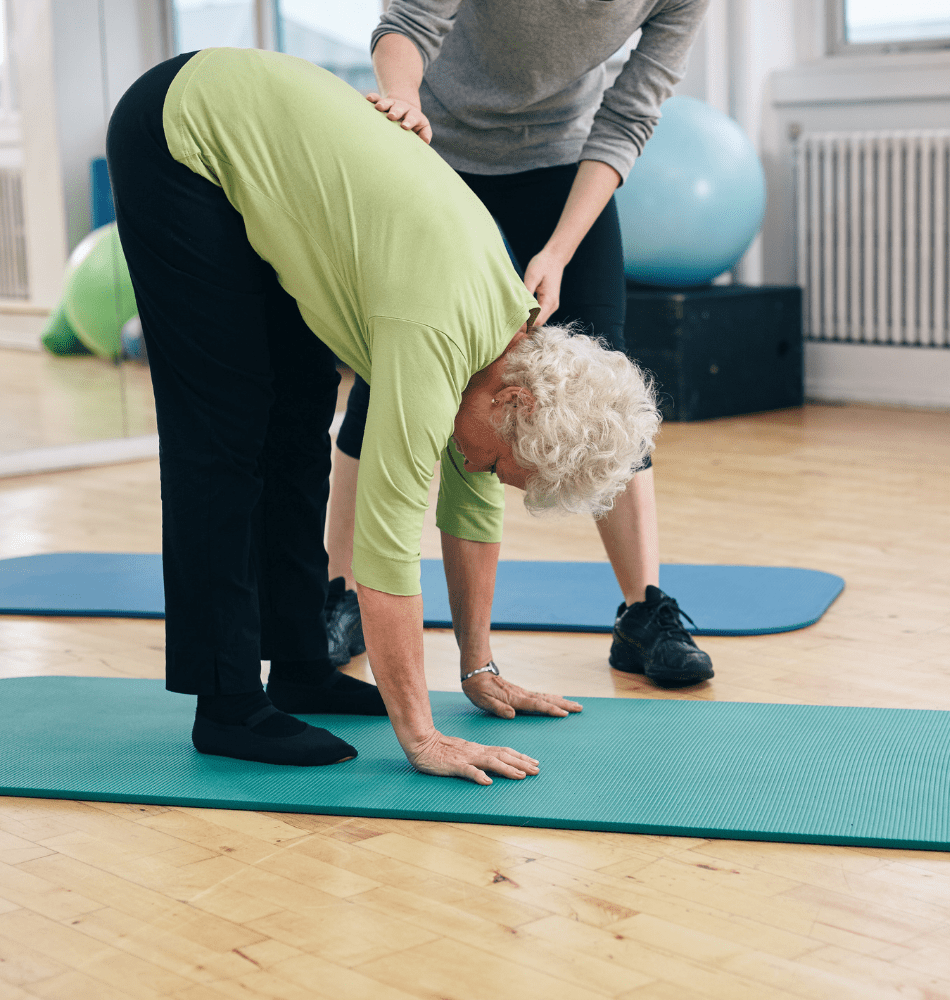
A COMPREHENSIVE APPROACH TO PARKINSON’S REHABILITATION
Parkinson’s disease affects far more than movement alone. As the condition progresses, many people also develop muscle and joint stiffness, back or neck pain, shoulder problems, reduced flexibility, balance impairments, and a greater risk of falls. Previous injuries, arthritis, and other orthopedic conditions can further limit mobility and make everyday activities even more challenging.
That’s why our treatment goes beyond movement training. In addition to large-amplitude movement exercises, we incorporate balance and gait training, fall prevention strategies, strengthening, flexibility exercises, and hands-on physical therapy to address the problems that often accompany Parkinson’s disease.
When appropriate, we also use specialized manual therapy techniques, including Fascial Counterstrain, to help reduce pain, improve mobility, and restore more comfortable movement. By addressing both the neurological and musculoskeletal factors that affect function, we create a treatment plan that supports safer movement, greater confidence, and long-term independence.
Frequently Asked Questions About Parkinson’s Disease
Can physical therapy improve Parkinson's symptoms?
Yes. While physical therapy cannot stop or cure Parkinson’s disease, it can help improve many of the symptoms that affect daily life. Treatment may improve walking, balance, posture, flexibility, strength, coordination, and overall mobility. It can also help reduce the risk of falls, make everyday activities easier, and support long-term independence.
When should someone with Parkinson’s start physical therapy?
As early as possible, even at diagnosis. Early intervention with physical therapy can slow down functional decline and help maintain independence longer.
Do you offer LSVT BIG® therapy?
Our physical therapy assistant completed advanced training in LSVT BIG® and has years of clinical experience working with people living with Parkinson’s disease. Today, we continue to incorporate these evidence-based movement techniques into individualized treatment plans while also addressing balance, pain, gait, and other mobility challenges.
Can physical therapy help prevent falls in people with Parkinson's?
Yes. Physical therapy can improve balance, walking, strength, and coordination. In addition, therapists can recommend strategies to help reduce the risk of falls and improve safety during everyday activities.
How often should someone with Parkinson's attend physical therapy?
The right schedule depends on your symptoms, goals, and stage of Parkinson’s disease. Therefore, your therapist will recommend a treatment plan based on your individual needs and adjust it as your condition changes.
Can physical therapy help with balance problems caused by Parkinson's?
Yes. Balance training is an important part of Parkinson’s rehabilitation. It can improve stability, increase confidence while walking, and help make everyday movements safer.
Can physical therapy help with walking difficulties in Parkinson's disease?
Yes. Physical therapy can help improve walking speed, stride length, posture, and coordination. For example, movement training and gait exercises can help make walking more efficient and reduce the risk of falls.

KEEP DOING WHAT MATTERS MOST
Every person experiences Parkinson’s disease differently. That’s why every treatment plan at PD Rehab is built around your symptoms, your goals, and the challenges that matter most to you. Together, we’ll help you move more comfortably, improve your confidence, and stay active for as long as possible.