Chronic Constipation – Causes That Are Often Overlooked
Why bowel movement problems may be related to tissue tension, the diaphragm, and the pelvic floor
Constipation is one of the most common digestive issues, as described by the Cleveland Clinic. Many people experience it occasionally, and in most cases, it improves with dietary changes, increased fiber intake, or improved hydration.
However, there are situations where difficulty with bowel movements lasts for weeks or even months despite following these recommendations. In such cases, patients often begin to wonder what may be causing chronic constipation and why symptoms continue despite a proper diet and treatment.
Chronic constipation can have multiple causes, as outlined by the National Institute of Diabetes and Digestive and Kidney Diseases (NIDDK)—not only dietary but also functional and mechanical. Increasing attention is being given to factors such as tension in the abdominal tissues, restricted diaphragm mobility, pelvic floor dysfunction, and scar tissue after abdominal surgery. The digestive system works in close coordination with the musculoskeletal and fascial systems. If tissue tension in the abdomen or pelvis is disrupted, it may affect pressure regulation within the abdominal cavity, intestinal function, and bowel movement.
In some patients, these mechanisms may play an important role in chronic constipation, especially when symptoms persist despite a proper diet and treatment.
Common Causes of Chronic Constipation in Adults
Constipation is most commonly associated with insufficient fiber intake, low fluid intake, or physical inactivity. These are indeed important factors that can affect bowel function. However, in clinical practice, we often see patients who continue to struggle with bowel movements despite having a proper diet. In such cases, it is important to consider additional mechanisms.
Factors that may contribute to chronic constipation include:
- tension in the abdominal tissues
- restricted diaphragm mobility
- pelvic floor dysfunction
- scar tissue and adhesions after surgery
- dysfunction of the autonomic nervous system
Each of these factors can affect both intestinal mechanics and the regulation of abdominal pressure.
The Role of the Diaphragm in Bowel Function
One of the key elements influencing abdominal function is the diaphragm. It is the primary muscle involved in breathing and separates the chest cavity from the abdominal cavity.
During inhalation, the diaphragm moves downward, thereby increasing pressure within the abdomen. It works in conjunction with the abdominal and pelvic floor muscles. This coordinated mechanism helps regulate intra-abdominal pressure and supports the function of internal organs.
If diaphragm mobility is restricted—for example, due to chest muscle tension or chronic muscular tightness—this mechanism may become less efficient. As a result, pressure regulation in the abdominal cavity may be disrupted, thereby affecting bowel movements.
Additionally, the autonomic nervous system plays an important role in bowel function. It regulates intestinal motility and organ function. When its activity is disrupted—for example, due to chronic bodily tension, inflammation, or prolonged strain—the signals controlling intestinal function may become less effective. This can slow down intestinal movement and contribute to constipation.
How Abdominal Tissue Tension Affects Bowel Function
Less obvious factors contributing to constipation include tension within the abdominal tissues. The fascia surrounding internal organs forms a continuous network of connective tissue that links organs. This network allows organs to move freely relative to each other during movement, breathing, and changes in intra-abdominal pressure.
When restrictions develop in this system—such as after injury, inflammation, or surgery—tissue mobility may decrease. This can lead to impaired bowel function and slower intestinal motility.
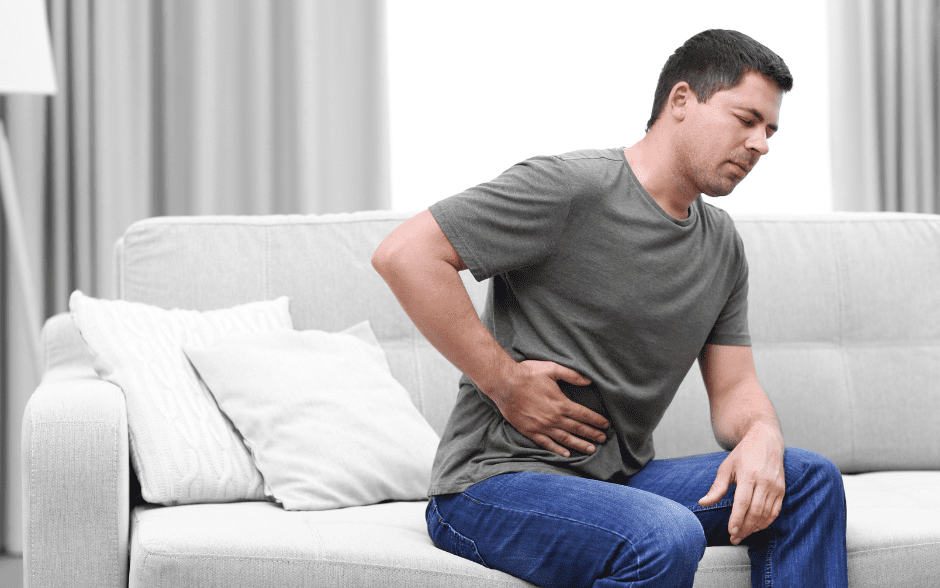
Patients often describe sensations such as abdominal fullness, bloating, and difficulty with bowel movements. Some also report that bowel movements require more effort or feel incomplete afterward.
In some individuals, these mechanisms may play a role in chronic constipation, particularly when symptoms persist despite dietary changes and treatment.
Symptoms That May Accompany Chronic Constipation
Patients may experience symptoms such as:
- a feeling of fullness or tension in the abdomen
- bloating that worsens throughout the day
- difficulty initiating a bowel movement
- the need for excessive straining
- a sensation of incomplete emptying
In some cases, these symptoms persist despite an adequate diet and adequate hydration.
Constipation and Intra-Abdominal Pressure Regulation
Another less commonly discussed mechanism influencing bowel movements is the regulation of intra-abdominal pressure.
During inspiration, the diaphragm, abdominal muscles, and pelvic floor muscles function as a coordinated system. This system supports bowel function and elimination.
If this coordination is disrupted—due to excessive tension in the abdominal fascia or abdominal muscles—pressure regulation becomes less efficient. As a result, the intestines may function more slowly, and bowel movements may require more effort.
Constipation and Pelvic Floor Tension
Another important factor is the function of the pelvic floor muscles. During a bowel movement, these muscles should relax to allow proper elimination. However, if they remain tense or fail to coordinate properly with the abdominal muscles, bowel movements may become difficult. In some patients, the pelvic floor muscles contract rather than relax during straining.
Patients may then experience:
- a sensation of incomplete evacuation
- excessive straining
- difficulty initiating bowel movements
- bloating or tension in the lower abdomen
These types of dysfunctions are known as pelvic floor coordination disorders and may contribute to chronic constipation.
The Role of Scar Tissue and Adhesions After Surgery
In some patients, chronic constipation develops after abdominal surgery. This may include procedures such as cesarean section, gynecological surgery, intestinal surgery, or hernia repair.
After surgery, scar tissue and adhesions may form within the tissues, limiting the natural mobility of organs and fascia. These restrictions can affect bowel function and cause tension in various abdominal regions. Symptoms related to adhesions may appear not only shortly after surgery, but also months or even years later.
How Abdominal Physical Therapy Can Help with Constipation
At PDR Physical Therapy & Wellness Center in Mount Prospect (Chicago suburbs), we work with patients whose constipation may be related to tissue tension, restricted diaphragm mobility, or pelvic floor dysfunction.
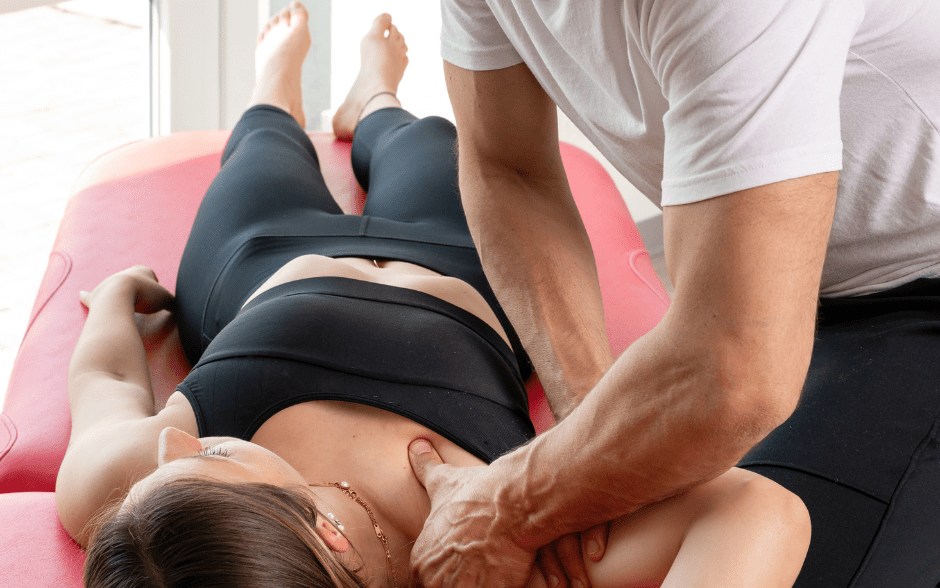
During the initial evaluation, we assess abdominal fascial mobility, breathing mechanics, muscle tension, and coordination between the diaphragm and pelvic floor. If the patient has a history of surgery, we also evaluate restrictions related to scar tissue or past inflammation.
Treatment may include Fascial Counterstrain and other manual therapy techniques to identify and release tension in the abdomen, diaphragm, and structures related to the digestive system. In many cases, treatment also extends beyond the abdomen to include the chest, thoracic spine, and cranial structures. This is because the fascial system forms a continuous network throughout the body, and restrictions in one area can affect function elsewhere.
The goal of therapy is to restore natural tissue mobility and improve coordination between the diaphragm, abdominal muscles, and pelvic floor. This helps normalize intra-abdominal pressure and supports proper bowel function.
Why Traditional Physical Therapy Doesn’t Always Help
Traditional rehabilitation approaches often focus on strengthening abdominal muscles or improving general physical fitness. While beneficial, this approach does not always address the root cause of chronic constipation.
If symptoms are attributable to fascial tension, restricted diaphragmatic mobility, or pelvic floor dysfunction, exercises alone may be insufficient. In such cases, it is important first to assess tissue tension and abdominal mechanics. Once these are improved, exercise may become more effective.
How Fascial Counterstrain Works
At PDR Physical Therapy & Wellness Center in Mount Prospect, our specialists primarily use Fascial Counterstrain—an advanced manual therapy approach. This technique focuses on identifying and releasing tension within the fascia and structures associated with internal organs. It is very gentle and does not involve aggressive stretching. The goal is to calm the body’s protective responses and restore normal function.
In many cases, treatment also helps regulate the autonomic nervous system, which plays a key role in digestion and bowel function.
Treatment for abdominal issues may include work on:
- abdominal fascia
- the diaphragm
- chest structures
- areas connected to the digestive system
Because the fascial system is continuous, tension in one area can influence organs in another. Understanding these relationships allows for a broader and more effective approach to treating constipation.
When to Consider Physical Therapy
Not every case of constipation requires physical therapy. However, it may be worth considering if:
- constipation persists despite dietary changes
- symptoms keep returning despite treatment
- bloating or abdominal pain is present
- symptoms appeared after abdominal surgery
- there is difficulty initiating bowel movements
In these situations, evaluating the function of the abdomen, diaphragm, and pelvic floor may help better understand the underlying cause.
When to Seek Medical Evaluation
In most cases, constipation is functional and not related to a serious condition. However, medical consultation is recommended if:
- there is a sudden change in bowel habits
- blood appears in the stool
- there is unintentional weight loss
- abdominal pain is severe or worsening
In such cases, further diagnostic testing may be necessary to rule out other causes.
Frequently Asked Questions
Why do I have constipation despite a healthy diet?
+
Constipation is not always caused by diet alone. It may be related to tissue tension, diaphragmatic restrictions, or pelvic floor dysfunction, all of which can affect bowel mechanics.
Can abdominal muscle tension cause constipation?
+
Yes. Excessive tension in the abdominal muscles and fascia can disrupt pressure regulation and impede bowel movements.
Can constipation be related to the diaphragm?
+
Yes. Limited diaphragm mobility can affect intra-abdominal pressure and bowel function.
Can surgical scars cause constipation?
+
In some cases, yes. Scar tissue and adhesions can restrict tissue mobility and affect intestinal function.
Can physical therapy help with chronic constipation?
+
Yes, in certain cases—especially when the issue is related to tissue tension, diaphragm function, or pelvic floor coordination.
Can constipation cause bloating and abdominal fullness?
+
Yes. Slower intestinal movement can lead to gas buildup and increased abdominal pressure, causing bloating and discomfort.